Showing posts with label International Development. Show all posts

Saturday, April 13, 2013

An ode to Marieke

In the past two weeks, through work, I have met four amazing Dutch women, all by the name of Marieke, albeit written in differently in one case (Mariken). Over lunch in Costa Rica the father of my colleague asked me what that weird name was we kept on repeating. He thought we said 'Marika' which in Spanish is colloquial for 'gay'. But in Colombia (or at least in Cartagena) they use it to refer to anyone, not always in the most positive way. In the Netherlands, however, it's a very normal name. Whether you think it's a weird name or not, Mariekes rock!
An assignment Marieke made me do.
Marieke is a passionate Design Thinker and devotes all her time to helping people think differently in order to come up with solutions to their problems or to invent new things. She told me she does not separate working hours from leisure time, because she loves what she does so much. Mariken bursts with energy and great ideas. She is an entrepreneur that brings people together in order to make the world a better place. Our first encounter lasted three days, as we kept on running into each other. Nice detail: she was the 200th 'liker' of Meer Lieve Brieven. Marieke is a player. Not with men, or well, I don't know her that well yet. Playing and helping others to play more is her thing. She's started the 'Speelkwartiertjes Club', an open group of people that play a fifteen minute daily game online on her cue. Dutchies: Join us! Marieke lives in Costa Rica, but she was born and (partially) raised in Indonesia. She abandoned the world of do-gooders to work in the private sector for a while, but is now back to facilitate workshops differently and to get people out of their comfort zones.

Thank you, ladies, for inspiring me. This one is for you.


*This is not even mentioning some of the other cool Mariekes I know. For instance: Marieke founded Ubuntu and now teaches fantastic Kundalini yoga classes in Amsterdam.


Monday, August 29, 2011

Who says learning is fun?

or: struggling to manage myself (part 3)

As you may remember, I am currently self-employed. Since May, I have taken a few months to reflect on my professional journey so far and work on my project - NGO toolkit, a website helping NGO's (non-governmental organizations) in developing countries to more easily access information on how to manage their organization and measure their successes. There is already lots of information about this topic, but it mostly comes in the shape of thick handbooks. As I've seen from up close, most people working at NGO's don't take the time to read these. So, instead, I will offer videos and summaries.

Talkative Amis at age two

As I had no idea how to build a website, let alone how to make a video, I started completely from scratch. There I sat in an apartment in Hanoi, all set up to record my first video. And then the talkative Amis, that enjoyed giving trainings in Jakarta, had left the building. Completely gone! I hadn't realized that in order for me to be spontaneous, I needed an audience or more practise. At first, I got very frustrated and wanted to quit. Then I became aware of a shocking fact: I do not like to learn new things as I say do. It's not fun to suck at something! I wanted it to be perfect at the first try. But of course we all know it's about daring to fail. That, my friends, is not easy...

The footage from the first rounds of recording was too funny to be wasted though. So I made a little compilation. Here I am, making a fool of myself. Enjoy!

Oh, and the music continues for a while as I didn't know at the time how to cut the audio file :)

Thursday, June 16, 2011

The misery of free time

Or, struggling to manage myself (Part 1)

Since my contract ended as advisor on Planning, Monitoring and Evaluation at KontraS on the 1st of May, I have had time off. I knew from the beginning my posting (by Togetthere) would only be for 18 months and had come up with the idea to write a novel about my family. I was inspired by Eat, Pray, Love, I guess, and envisioned a little house between Balinese rice fields where I would write for 3 months. After doing some initial research (interviewing some family members), I decided not to write the book. At least, not now. It's a great story, but too much to handle (believe me!). Jokingly I told my nephew, who had been helping me, that only he would be able to tell the story of how his aunt went insane, if I'd continue.

Sorry grandma, no 'Wild Swans' about you

No book then. But the idea of taking 3 months for myself still sounded very good. As my boyfriend was planning to start an online business, I figured we could do what Tim Ferriss advises us all to do: work remotely and take a mini retirement. That is, in short, how we ended up in Hanoi. After enjoying a holiday by the beach, writing out my notes and reports for Togetthere and going around Vietnam with my dad, I have now been behind my computer for a week and a half. You're probably wishing you could take a break from it all and take a few months to do anything you like. Well, I can tell you: this freedom is a pain!

All set to work!

Every day I have a new idea of what I could do or a different approach to what my life should look like. Do I want to do something meaningful or make buckets of cash? Or should I just try to find a niche to make some passive income on? This way, I'd have enough money to live from and could use all my time helping other people. Or should I start a social enterprise? Maybe I should just be a consultant in monitoring and evaluation, or a writer of blogs on coffee, or a remote English teacher for Indonesians. The web provides loads of inspirational material, but it's overwhelming too. Can I be as good as Salman Khan? Am I really the first female lifestyle designer? "Neh, don't be silly", my Dutch calvinist brain says (constantly), "Just act normal, that's crazy enough". Then another hour of browsing for a safe 9-5 job begins. For all my life, I've been trained to do what other people wanted me to do: homework at school, tasks at work. Now that I choose to be my own manager, I just cannot decide on what to do. 

Activists in Jakarta - they know what to fight for

Yes, I know: I have to not be too critical about my own ideas and set small goals for myself (I have read every single blog about this topic!). But the lizard brain is at work. As Seth Godin tells us, we all have a part of our brain that will resist to anything scary. In this case, I can tell you: I am scared shitless. I want to contribute to something bigger and I want everybody in the world to like it. Just the thought of you thinking "What is this girl doing?!" makes me want to hide my head under a pillow for the rest of the day. Instead of doing that, I have decided to drag you along with me. With this post I am starting a new series keeping you updated on my progress. Stay tuned for my next post! 

Any advise? Please leave a comment and let me know what you think!

Thursday, May 26, 2011

Five things I learned in Indonesia


The past few weeks in Vietnam have been very relaxing. After escaping the bustle of Saigon, I breathed in some fresh mountain air in Da Lat. More lazy days followed on the beach in Mui Ne, where I reflected on my time in Indonesia. I wrote reports for PSO, ICCO and KontraS telling them about what I think made my posting successful and which great plans never materialized. All this thinking about my year and a half in Indonesia, made me realize that there are so many things I've learned. Since five is my lucky number, I came up with my my top five! After living in Indonesia, I can (amongst other things):

5. Use dirty toilets. Yes, I have complained about the hygiene at Indonesian toilets before, so I will not do that again here. Instead, I will just applaud myself for being able to deal with the unfreshness (to formulate it nicely). My lady bag (I have had complaints of it being too messy) is always armed with wet and dry tissues. Also, I can squat and hold my breath at the same time now. Hear, hear for that, no?

4. Laugh out loud. In an earlier post, I explained how the roaring laughter of Indonesians (usually occurring in groups) can make my day. Well, I can do it too now! The joke doesn't even have too be that funny, which is a good bridge to number 3 on my list.

3. Make bad jokes. Indonesians are stars in slapstick and obvious jokes. Not to mention repetition. Who cares that the same joke about two single colleagues possibly being a good love match has already been made during every staff meeting in the past six months?! Right, no one. As I enjoy being the center of attention, I also wanted to take part in all this fun. No need to be creative! I just recycled someone else's joke and was sure to be met with a room full of laughter. Wow, I'm sure gonna miss that back home...


  The funny bunch

2. Be late and say it was due to traffic. In the Netherlands, I am usually perfectly on time. That means that for formal things I will be 5 minutes early and for a date with a girlfriend (depending on the timeliness of the friend) be on time or up to 10 minutes late. In Indonesia, everyone is too late. Or (not many people know this) too early. Whether too late or too early, the stress should be on the word 'too' here. People stuck in traffic can be an hour late and text you when they are 30 minutes late to tell you they will be even later. People who were prepared for traffic can on the other hand suddenly be an hour early. Very inconvenient when you planned to clean up your house before they came. Anyway, I can do it too now. Come an hour late, that is. I'll do my hair, dress up and jump in a taxi way too late and then blame ever congested Jakarta for making me arrive so late.

1. Eat spicy food. My mom eats everything with chili sauce. Even hotchpotch (Dutch culinary explosion consisting of mashed potatoes and vegetables, usually eating with a meatball or sausage) is better with a spoonful of sambal. I think living in Indonesia did something with my taste buds as I long for spice all the time. I add red (or when I feel adventurous green) peppers to my Vietnamese noodle soup and will not eat fried rice without spicy sauce. What's worse is that pizza's have lost some flavor. At pizza places in Indonesia you will always get some sauce on the side (French fries come with chili sauce too by the way and you have to ask for ketchup if you want it). If I wouldn't feel ashamed, I would eat them with spicy sauce now as well...


Spicy!


Wednesday, May 18, 2011

In-between and inside-out

Even though I am not in Indonesia any more (and no longer in-between and inside out), I wanted to do some self-promotion here and direct you to an article I wrote not too long a go for a great online magazine about Indonesia called Inside Indonesia. All the experts on Indonesia are represented there, so I feel especially honored that my article was published. Let me know what you think of it!  Click here to read it. Do also browse their website if you're interested to learn more about Indonesia. Their latest series is about the rich in Indonesia - that's bound to be a fascinating read!

Tuesday, May 17, 2011

Why do you do what you do? Part three

Several weeks a go, I participated in a two-day workshop organized by the Indonesian Community for Democracy (Komunitas Indonesia untuk Demokrasi - KID) with people all working in the field of social change or development aid. In short, people that want to make a difference somehow. So I asked them WHY they do what they do. And this is the result:

 "I am doing what I am to do"

 "Because I have a dream"

"Because I want to be meaningful"

"Because I already Kecemplung"
(Because I'm already splashed)

"Because I want to explore the world, but keep close with my children"

"Karena saya senang melihat kerukunan, kerja sama dan melipir" 
(Because I like to see harmony, cooperation and quietly sneak off) 

"Because there 're limited choices 4 me"

"Cos I'm a human"

"Menarik dan selalu memiliki tantangan" 
(Because it's interesting and challenging)

"I want to change & .... ?"

"Karena saya memiliki mimpi" 
(Because I have a dream)

"I really be a listener + many issues + money + freedom / so many time I have 212"

Wednesday, January 26, 2011

Why do you do what you do? Part two

After asking my first wdydwyd session, I decided it wouldn't be the last. As I teach English at work every Wednesday, I took the opportunity to ask some of my colleagues why it is they do what they do. The result speaks for itself. Thanks guys!

Putri: "Because I have no reason not to do it"

Daud:"Because I love justice and I'll never stop fighting for it"

Astri: "Because I love to interact with victims"

Neneng: "Because I hate doing the same thing all the time"

Regina: "Because it will help me buy a beautiful house"

Ati: "Because I feel great working with activists fighting the generals :)"

Ali: "Because I am a socialist and I want to go to heaven"

Note: the pictures were taken with iPhone Application Hipstamatic (which make all pictures look good).

Sunday, January 2, 2011

Why do you do what you do?

A very good friend of mine, Miriam, went to Burning Man a few months ago. This yearly event in the American desert brings thousands of people together to find inspiration and 'breathe art' - as their website indicates. Miriam came back showing me the website of "Why do you do what you do?". It's an initiative that started at Burning Man, where people where asked to describe on a sheet of paper why it is that they do what they do. Of course, you have to do it on the spot and may have a better idea afterwards; it's just a snapshot. But especially these spontaneous moments have the tendency to bring up the best in people.

During a course I did a few weeks ago with other development aid workers, the questions popped up again. Why do we go to Indonesia, Sudan, India or Uganda to work on human rights or peace building? Why do we train others to this kind of work? Why (especially in a climate more and more critical towards development aid) do we do what we do? Curiosity for what the other participants would answer made me ask them: Why do you do what you do? A bit shy at first and insecure of whether they'd be willing to participate, I was happily surprised by the funny and encouraging results afterwards. A good way to start the new year, I think - Ask yourself the question too...

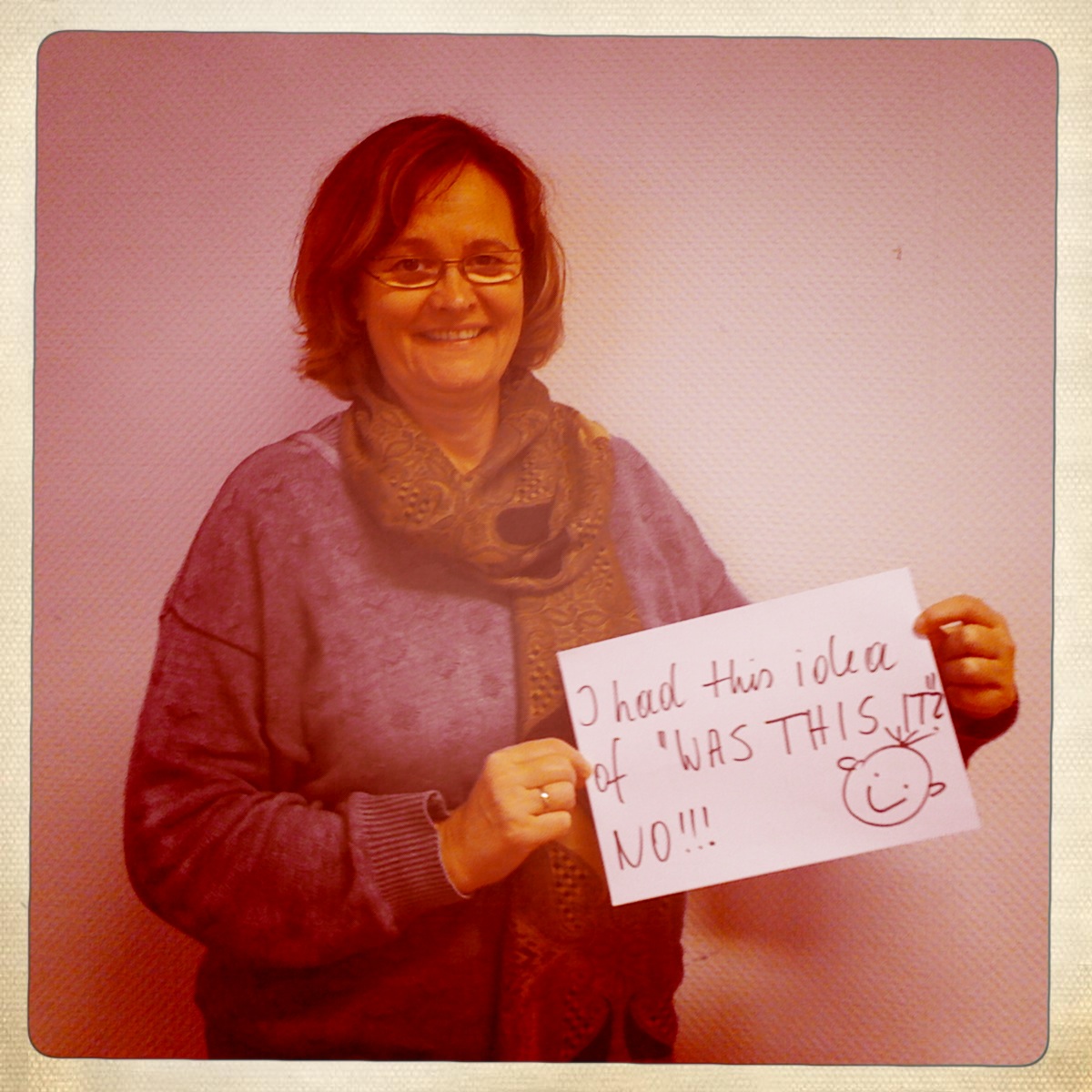
Susanne Wienholt-Kall, Civil peace worker in training for Uganda: "I had this idea of 'WAS THIS IT?' NO!!! :)"

Irma Alpenidze, trainer at MDF: "I love to interact with people that want to change"

Heleen Reedijk, trainer at MDF: "Because I am good at it and it stimulates me. Love to work/interact with people"

Ulrich Thum, Civil peace programme advisor: "Because it keeps me from doing the same things all the time"

Jonas Wipfler, trainee of AGEH and Misereor: "I cannot imagine another job as challenging as the one I have currently"

Amna Muharemovic, Trainer at MDF: "Because I am still 'figuring it out' :)"

Martijn van den Boogaart, Consultant for GZB: "Because I want the church in Malawi to really live out their faith"

Eliza Isabaeva, Student: "Because Eliza always does what she wants, loves & crazy about"

Me, Advisor on Planning, Monitoring and Evaluation: "Because I can't help wanting to help other people"


Tuesday, September 14, 2010

Remembering Munir


Last week Tuesday, it was six years since Munir was murdered. Munir was an Indonesian human rights activist who was a strong advocate for victims of grave human rights violations in Indonesia. He set up several human rights organisations, one of which is KontraS.

On 7 September 2004, he went on his way to study in the Netherlands, but on his trip he was poisoned with arsenic. When his plane landed in Amsterdam, Munir already passed away. For six years now his wife, former colleagues and friends have been pushing for justice. Even though the Garuda pilot who gave Munir the poisonous drink, Pollycarpus, is behind bars, the people who planned the murder still walk freely. After the case against the suspected mastermind Muchdi was acquitted due to lack of evidence in december 2008, not much has happened. Last week some 500 people demonstrated in front of the presidential palace to demand justice. Munir, you will not be forgotten!

Saturday, June 19, 2010

Indonesia, Indonesia - "But you're so bule!"

Every day in Jakarta, I have the same conversation. With taxi drivers, waiters, cashregister personnel, NGO colleagues, they all use the same format. After the standard questions (which in the West would seem very nosy) about where I'm from, my purpose for being in Indonesia and my marital status (including "Why don't you have children yet?"), the rest of the conversation goes something like:

"For how long have you been here?"
"Six months now', I say.
"What? But your Indonesian is already fluent!" they exclaim in happy surprise.
I say:"Yeah, well, my mom is Sundanese".
"But, your so bule!"

That sentence always leaves me silent. What can I say to that? "Yes, I know"? Because I really do know.

So, I tried the strategy to just NOT mention my Indonesian roots and say I have studied Indonesia for a long time. Sometimes I even pretend I'm such a genius that I mastered the Indonesian language in a mere six months. That one isn't very nice, especially not when meeting very friendly people. My latest is to tell people I am from Cimahi, Bandung. That one works amazingly well. People laugh and think I'm just a bit crazy. Sometimes I'm really fed up by re-telling this story day in day out. On the other hand, it's great to be here, because I keep on reinventing myself!

*bule refers to white people


With my mom and sister in the centre of the Old Jakarta

Sunday, June 13, 2010

Leaving Microsoft to change the world - Book review

In this book, John Wood describes how he went from being a manager at Microsoft to the founder and director of Room to Read, a charity that builds libraries and schools in developing countries. It's an easy and fun to read book about how he sets out to improve literacy for ten million children by 2015. He seems very successful in his endeavors and has achieved to set up 1128 schools and 10.000 libraries, benefiting 4.1 million children thusfar.

Being advisor on Planning, Monitoring and Evaluation, I read this book with scepticism. Who was this businessman coming into the world of development aid, claiming that he was the first to do something substantial against illiteracy? Weren't there not tens if not hundreds organizations already working on this? Yes, there are. But honestly speaking, not many have achieved to work in nine countries, providing access to millions of children to books and doing all of that with private funding.

So how about the results he mentions? For organizations that receive government funding or funding from international donors, it's usually not enough to merely state what the outputs or direct results of their activities are. So, they cannot just say that their 'impact' was 8944 scholarships for girls. The scholarships are just the outputs. They actually have to try to prove that the scholarships helped girls gain knowledge which they use when they grow up. Are these organizations going to far in trying to measure this impact? Should we just work it in a more businesslike way? Apparently, the information that Room to Read is providing is enough to generate more and more funding each year. That's the way the market works, right?

One thing that stood out for me was that he only sporadically mentioned a project that wasn't very successful. Does this mean there weren't many? Or does it just mean he doesn't want to (as we say in Dutch) hang out his dirty laundry? From what I can tell, many projects in development aid are not as successful as planned and hoped, because reality always seems to pose new problems. I would be interested to hear more about what happens in the kitchen of Room to Read. What's their secret recipe?

Despite my critical outlook (mostly about the idea that development aid is just a thing you do on your gut feeling), I feel that the development aid community can learn a lot from this businesslike way of doing things. One element is the personnel you hire: Yes, we all work towards a common goal, but that doesn't mean that anyone who just wants to do good can be on the team. In order for it to work, organizations need committed professional staff. Furthermore, ownership of the local communities needs to be ensured. So without a contribution from the schools, parents or village chief, there will be no Room to Read library or school.

To end off on a light note: There is a vacancy with Room to Read for which the requirements are listed below. First of all, I note that professional experience in development is required. This means that 'this businessman' does surround himself with knowledgeable people. Secondly, I find the last requirement hilarious! I suppose Microsoft sponsors the software they use. No Macs allowed.

Required
Master's degree in: Education, Social Science and/or another related discipline
A minimum of 8+ years of professional experience in development/academic organization
Experience in implementation of education programs on a large scale
Must have lived or worked in an Asian country for at least eight years
Ability and desire to travel within the region frequently (about 30-50% of the time)
Proven track record of achieving results
Ability to juggle multiple priorities simultaneously and take initiative
Proficiency is using Microsoft Office tools


With or without reading this book; please go out and change the world!

Thursday, March 4, 2010

Indonesia, Indonesia - Fogged out of the office


Where in the world do your colleagues run into your office saying: "Come outside now, they're coming to fog the office!" and then you grab your phone, you stand outside the office with everyone else, some guys in blue overalls come in with big smoke guns spreading out some deadly fog, only to walk out followed by cockroaches running for their lives (most of them in vain though)? Right, Indonesia. The area where I work was cleared of dengue mosquitos last week, or at least that's the idea. I hope it worked, cause I would not like to fall ill like my friend Egbert.

The fogging was quite an experience, especially since it took at least an hour before it was deemed 'safe' to move back in. Completely unprepared as I was, I hung around and chatted with the other 'evacuees'. They did not however seemed to be bothered as much as me by the smoke residues floating around. It smelled like Baygon all day and that can never be good for your health! Well, obviously someone made the decision that inhaling some toxic smoke would beat getting dengue, which I guess makes sense. While we were all standing outside though, with roaches running towards us, I wondered if there's no other way of beating the mosquitos. Or was this just an attempt to distract a bunch of human rights activists?

Anyway, at least many roaches died of suffocation that day. Also, when, one day later, I was surprised at being bitten by a very much alive mosquito, someone said: 'No, but the fogging only kills the dengue mosquitos'. Say what?! Can someone explain that to me please?

Sunday, February 14, 2010

Indonesia, Indonesia - Tomorrow's leaders?


Because of my teachers, we can be smart

Right next to my apartment building is a High School. Every Monday morning I wake up from their weekly opening's ceremony on their main square. The kids all stand in their uniforms (often in the blazing sun) and recite the five basic ideological principles of the Indonesian state, the Pancasila. Usually the students are spoken to firmly and sometimes they're even scolded publicly by the teachers ("these two in the front here still have very messy hair and they will be punished accordingly later"). The teachers like to use a megaphone and preach about how the students should work harder to beat the Malaysians and the Chinese, how they cannot bring their cellphones to class and how they should not curse at school (see video).


"Often the teachers hear words that are not very nice to hear and which should not be used by students and which very easily come out of your mouths which means that these words are not uncommon to be used"

Every week I wonder what will become of these kids. Will they ever learn to use their minds freely, creatively and independently? How can they help this country forward if they were raised reciting texts and being spoken to by teachers in a demeaning way? Just recently the first two parts of a very popular novel tetralogy were made into movies; Laskar Pelangi (The Rainbow Troops) and Sang Pemimpi (The dreamer). The story is very much about education and how good teachers can bring out the best in almost anyone. The movies are box office hits and I can only hope there will be a lasting impact.


Trailer of Laskar Pelangi, the film directed by Riri Reza

Friday, December 4, 2009

East versus West?

Despite my Indonesian (Sundanese to be exact) roots, the first weeks in Indonesia have mostly made me aware of my infinite Dutchness. I eat rice for lunch, but really need bread for breakfast. I'm pretty laid back when it comes to timing, but if people don't show up for an appointment, I am agitated the rest of the day. With amazement I look at friends that discuss designing and printing 10.000 pamphlets to be distributed all over Indonesia. Before when? Oh, a week from today. Say what?! In the Netherlands we would have packed our bags and gone home (even though distribution "all over" the Netherlands is a whole lot easier). An endeavor like that within such a time frame is bound to fail. Well, not in Indonesia. Here, almost anything is possible. If you just push and shove on the right sides.

This TED India talk by Devdutt Pattanaik talks about these differences of perception. He describes an inherently different way of living. Neither way is good or bad; we just need to realize we have different set of myths we refer to.

Devdutt Pattanaik: East vs. West -- the myths that mystify | Video on TED.com

Tuesday, November 17, 2009

How the gecko fights the crocodile


For the past weeks, Indonesian news has revolved around the battle between the Indonesian Corruption Eradication Commission (KPK) and the police. President Soesilo Bambang Yudhoyono (SBY) has made fighting corruption his flagship issue and thus established the KPK some four years ago. The KPK has thusfar brought several corruption cases to light. Then in May this year, the KPK's good name came under threat as its chairman, Antasari Azhar, was accused of ordering the murder of Indonesian business man Nasruddin Zulkarnaen. Not only was this said to be a crime passionel (supposedly, Antasari had an affair with a 22-year-old golf caddie, who happened to be Nasruddin's third wife), it was also speculated that Nasruddin tried to bribe Antasari to stop pursuing him in a corruption case.

Well, this is only the beginning. The story involves many players and intrigues, which are for the large part hard to keep up with. Most importantly, the two deputy chairmen of the KPK, Chandra Hamzah and Bibit Samad Riyanto, were accused of having accepted bribes. A high ranking police officier stated that the KPK and the Police relate to one another like a cicak (gecko) to a buaya (crocodile). It's a useless fight, or so he says.


Three star police general and national chief of detectives Susno Duadji illustrates

This analogy spoke to everyone's imagination and is now widely used. The extraordinary thing about it is that the public has risen to the defense of the KPK. Quiz participants on television wear black bands around their arms in solidarity with the KPK, students camp out in front of the KPK building and some were even on hungerstrike (?), NGO's organize press conferences to express their viewpoints and last week Sunday (at 7 am!) famous Indonesian bands (including the extremely popular rockband SLANK) performed at one of several demonstrations - this one attended by about a thousand people. 

And there's more: most surprisingly even is the online activity. As Indonesians too are active facebookers (membership rose with 800% over the past months, to 9 million), they have set up groups like 'Gerakan 1.000.000 Facebookers Dukung Chandra Hamzah & Bibit Samad Riyanto' which at time of writing already has over 1.2 million members. 


Two weeks ago SBY appointed eight experts (including renowned human rights lawyer Adnan Buyung Nasution) to get to the bottom of things. After two rounds of examinations, the team has recommended that charges against the two suspected KPK leaders be dropped. Also, Susno Duadji quit after wiretapes came out, which shows him invoved in a large conspiracy to bring down the KPK. Well, in Dutch we say that a story has a tail if you expect something not be completely over. In this case, involving geckos and crocodiles, there is no doubt about it: there will be a long, long tail.

And it wouldn't be Indonesia, if there wouldn't be a song:


Tuesday, September 1, 2009

Learning, learning and more learning

Lately I haven't blogged a lot. Why? Well, I've been learning. And that takes time. Apparently. In preparation of my new job, I have been offered an intensive five week training; Culture and Development, Capacity Building (see the trainer's account here) and Teaching Skills have already been finalized. Now it's just a safety training, facilitation and communication on my to-do list for September and October.

Well, I must admit: it hasn't been easy, all that learning. It's been a while since I'd been in school and my last course was in November last year (Planning, Monitoring and Evaluation in Nepal with CRSC, which was great!), so it took a while to get back in shape. It made me think about how it is that I learn (a question I have also asked myself lately in the context of speaking French and dancing salsa). What is a good learning environment for me? Which is the right challenge? And for my work, the question is how people in an organization learn and how they can transfer their knowledge.


One thing I encountered while learning was resistance. From within, deep deep within. Not so much a resistance to learning in itself, but resistance to failing. It was pure fear, fear of failure. Because failing is not fun. I want things to be right from the get go. And that never (or hardly ever) happens. You should burn your fingers first a few times. That I also found when I tried out snowboarding for the first time this February. How frustrating to not even be able to get up by myself! But after fifteen minutes of ranting and telling myself: "You can do this!", I was standing on the board and sliding down the slope. For just a few meters, but the beginning was there. And THAT is how we learn. To dare and fail. And to dare again. As Tim Ferris says: "Smash fear, learn anything".

Monday, June 15, 2009

Work from the soul, not from the ego

From 2-5 June, I had the pleasure to attend the Global Forum on Freedom of Expression in Oslo, Norway. It was very informative, useful and most of all extremely inspiring. Especially the session 'Silencing Women's Voices' with Lydia Cacho, Philo Ikonya, Irshad Manji and Malalai Yoga on the panel, roused in me a sense of urgency to go out and change the world. It is people like this we need in this world. Especially us women need role models like these. Lydia Cacho concluded by urging us all to work from the soul, to keep on fighting for what we believe in.


Hilarious! This woman is so courageous. A true example for women (and men!) all over the world.


What a shock when I saw myself! See after 7 minutes.

Friday, May 22, 2009

Aung San Suu Kyi


Approximately, two weeks now, she has been imprisoned in the notorious Insein Prison in Yangon, Burma - Aung San Suu Kyi, the leader of Burma's opposition party, the National League for Democracy (NLD). After being under house arrest for thirteen years, she was scheduled for release this week. However, a mysterious American man swam across the lake surrounding her house and spent the night there. After arresting the man when he tried to swim back the next day, the Burmese junta immediately used this incident as an excuse to lock Aung San Suu Kyi up in prison. Her trial is ongoing now.

In 2010 elections are scheduled, which the junta calls its first steps on the road to democracy. Having the leader of the NLD imprisoned is all too convenient for the military leadership. Through Burmese media in exile both Burmese in and outside their country as well as foreigners all over the world, have access to news from Burma. For more news, visit the Democratic Voice of Burma, Mizzima and Irrawaddy websites.


This cartoon was copied from the Mizzima website