Sunday, January 2, 2011

Why do you do what you do?

A very good friend of mine, Miriam, went to Burning Man a few months ago. This yearly event in the American desert brings thousands of people together to find inspiration and 'breathe art' - as their website indicates. Miriam came back showing me the website of "Why do you do what you do?". It's an initiative that started at Burning Man, where people where asked to describe on a sheet of paper why it is that they do what they do. Of course, you have to do it on the spot and may have a better idea afterwards; it's just a snapshot. But especially these spontaneous moments have the tendency to bring up the best in people.

During a course I did a few weeks ago with other development aid workers, the questions popped up again. Why do we go to Indonesia, Sudan, India or Uganda to work on human rights or peace building? Why do we train others to this kind of work? Why (especially in a climate more and more critical towards development aid) do we do what we do? Curiosity for what the other participants would answer made me ask them: Why do you do what you do? A bit shy at first and insecure of whether they'd be willing to participate, I was happily surprised by the funny and encouraging results afterwards. A good way to start the new year, I think - Ask yourself the question too...
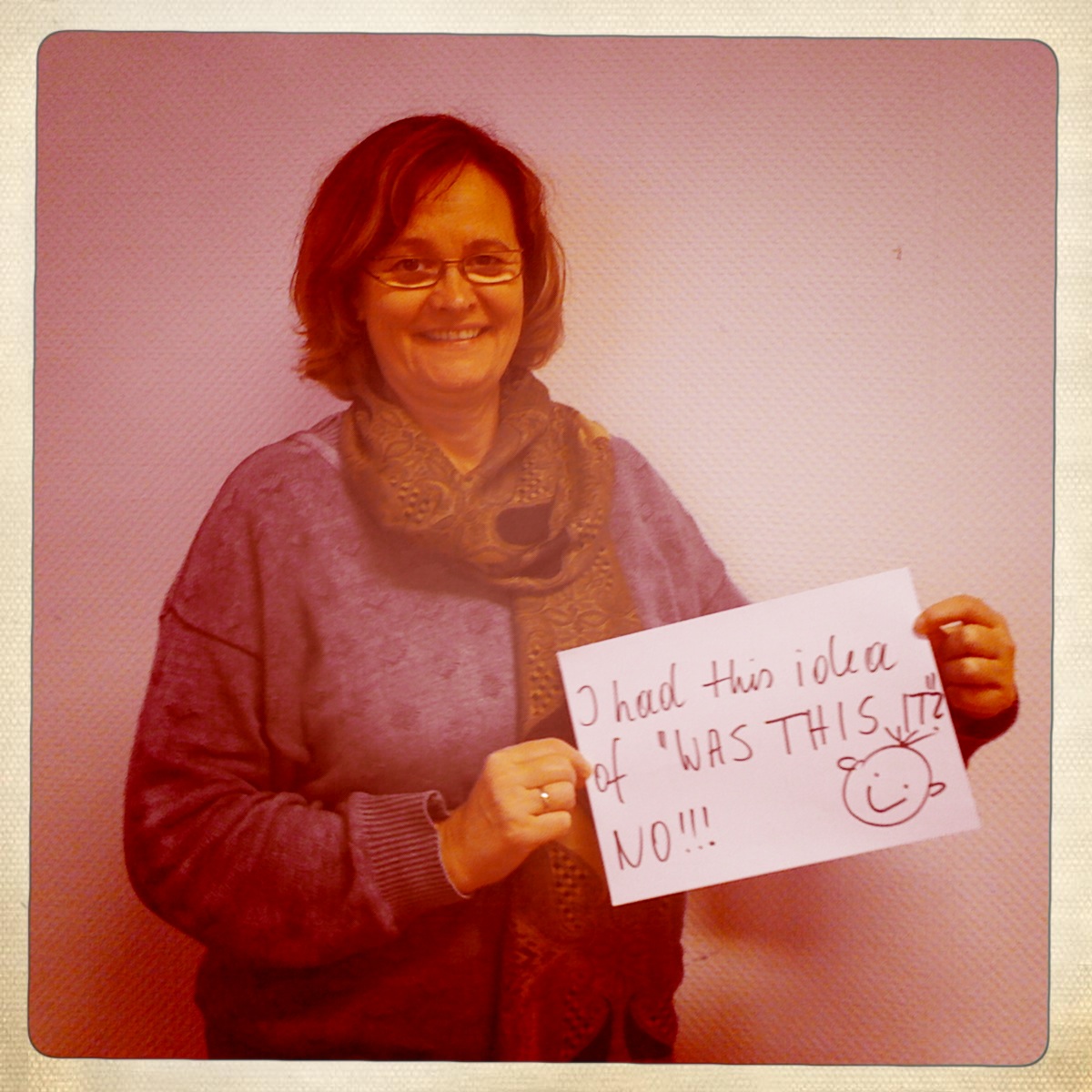
Susanne Wienholt-Kall, Civil peace worker in training for Uganda: "I had this idea of 'WAS THIS IT?' NO!!! :)"

Irma Alpenidze, trainer at MDF: "I love to interact with people that want to change"

Heleen Reedijk, trainer at MDF: "Because I am good at it and it stimulates me. Love to work/interact with people"

Ulrich Thum, Civil peace programme advisor: "Because it keeps me from doing the same things all the time"

Jonas Wipfler, trainee of AGEH and Misereor: "I cannot imagine another job as challenging as the one I have currently"

Amna Muharemovic, Trainer at MDF: "Because I am still 'figuring it out' :)"

Martijn van den Boogaart, Consultant for GZB: "Because I want the church in Malawi to really live out their faith"

Eliza Isabaeva, Student: "Because Eliza always does what she wants, loves & crazy about"

Me, Advisor on Planning, Monitoring and Evaluation: "Because I can't help wanting to help other people"


Sunday, December 12, 2010

Looking for a soulman

Since Amy Winehouse disappeared into a world of drugs and rehab clinics, I've been searching for a soulman or woman to fill the gap. Some great artists came along, old and new. I still love Mary J. Blige, have recently discovered Janelle Monae and really like soulwoman Sharon Jones. When it comes to male singers, I really like Daniel Merriweather and the French Ben L'Oncle.

But when I first heard Liam Bailey, I knew this is the guy I'd been waiting for! His voice - frail and worn yet strong - goes straight to the heart. His single 'Breaking out' has been lingering in my head for several days now. Liam released his first singles on Amy Winehouse's lioness label and will release his debut album in January 2011.


Wednesday, December 8, 2010

The flexibility of flip-flops


There's something about flip-flops in Indonesia. They don't seem to belong to anyone in particular. If you don't guard yours with care, they may disappear. You enter a house, leave your sandals at the door and may find them gone. This doesn't happen out of evil intentions, your sandals are just public property.

It has surprised me several times to see a male colleague wearing the pink fake diamond embroidered flip-flops he came across. When it's warm, you want to take off your sneakers and slip into a sandal. That makes sense. But to wear someone else's? Yes, you can! Apparently, sandals also have a tendency to disappear at mosques, someone quickly slips into them for doing wudhu (ritual washing) and misplace them.

I've learned a few things this past year: 1) expect a 2 euro flip-flop from the supermarket to disappear if you place them anywhere but under you desk, 2) when you leave your sandals at someone's doorstep, place them strategically on the side. This way people will not step on them. 3) wear shoes that are too out of the ordinary to be worn by someone else.


For the past weeks, I've been taking pictures of the flip-flips lying around. Plenty of choice it seems.

Sunday, November 28, 2010

Redefining the term 'Tourist trap'

A few months ago, I visited Luang Prabang, a Unesco World Heritage site. It's a small town with beautiful streets, houses and temples. Stuck in between the Mekong and the Nam Ou rivers with terraces by the water, it's a great place to spend a few days (we kept on extending our stay there). Besides strolling around visiting the temples, the main attraction is to get up at five and watch the monks make their alms round. It's truly impressive to see rows of orange robes passing by, bald monks carrying their silver boxes for the rice they are given.

Unfortunately however the many tourists are ruining this ritual. Some of them (probably not Buddhists) also sat on a mat to hand out sticky rice to the monks (being unexperienced they were slower than the locals, which led to queues of monks behind them). This tourist participation has led to a rather fierce sticky rice sale in front of the guesthouses. But worse are the tourists that 'forget' to pay respect to the monks. They stand tall in front of the monks (while you're supposed not stick out taller than them) and aggressively close in on the monks flashing their cameras in their faces. This was one of things signs all over town asked us not to do... It seemed the poor monks had walked into a tourist trap.

What should have looked like this
actually looked like this


A quiet backstreet was better, until one tourist decided to flash tens of monks in the face.


Lao women waiting for the monks

Monks in both streets

Monks passing by

Sunday, September 19, 2010

Ramadhan and the power of food

This year was my first ramadhan. Well, I did not actually join the fasting, but enjoyed seeing a completely different Jakarta. One thing all expats and Indonesians alike agree about is that Indonesian like to eat. They don't just like it, they love it. They LIVE it! Usually the first question when meeting a friend or family member is "did you eat yet?"If not, we have a good excuse to go and find some good food somewhere. Some of my Indonesian friends have really turned talking about food into an art. They can (seriously) talk for hours about great flavors, combinations and places where to find all these. No matter what they do for a living, after a while the conversation WILL turn to food.

And if you talk the talk, you must walk the walk,right? Well, that is no problem either. At work, for instance, there is basically always someone eating something at any random moment. Walk into someone's room unexpected and they're hanging above a noodlesoup, opening a bag of crackers or mixing the spices to go with rujak (young fruit). Go to the warung (foodstall) in front and someone chews away some krupuk or nuts. Any meeting longer than two hours is a reason to order snacks; fruit, filled tofu, pastei, pisang goreng, sweet coconut jelly cakes and more.


Curtain behind which people are eating

So, how does this go together with a month of fasting? Well, the days have been somewhat long. Lunch was sometimes hard to find, since many of the food stalls were closed. In respect for those fasting the warungs were covered and closed by cloths, so it felt a bit as if we were secretively steeling cookies from the jar (my mom used to hide the jar in some high up cupboard, but I always found it). However, when dawn came nearer. things quickly became fun again. Almost every day there was an invitation for 'Bukber', opening the fast together. We've had several at the office. About an hour before people could start eating they would already prepare all the food and gather around it. Plastic cups of Kolak (coconut soup often with banana, sweet potato or cassava) and es buah (fruit punch) were handed out about half an hour in advance. And then, you wait.


Bukber with my colleagues (Photo copyright I. Fernida)


The atmosphere was truly amazing. Everyone made sure no one stood there empty handed. Sometimes someone said a prayer and then, food! After people ate. they starting talking about food again. What to eat later on? And what to eat for saur (the last meal before the sun comes up)? Of course plans needed to be made for tomorrow's meal. I'm not sure if it was necessary, but fasting made us all appreciate food even more.

Tuesday, September 14, 2010

Remembering Munir


Last week Tuesday, it was six years since Munir was murdered. Munir was an Indonesian human rights activist who was a strong advocate for victims of grave human rights violations in Indonesia. He set up several human rights organisations, one of which is KontraS.

On 7 September 2004, he went on his way to study in the Netherlands, but on his trip he was poisoned with arsenic. When his plane landed in Amsterdam, Munir already passed away. For six years now his wife, former colleagues and friends have been pushing for justice. Even though the Garuda pilot who gave Munir the poisonous drink, Pollycarpus, is behind bars, the people who planned the murder still walk freely. After the case against the suspected mastermind Muchdi was acquitted due to lack of evidence in december 2008, not much has happened. Last week some 500 people demonstrated in front of the presidential palace to demand justice. Munir, you will not be forgotten!

Sunday, August 1, 2010

Five (of all the) things I like about Indonesia

Sometimes I complain about Indonesia. Because things are different here. Because I'm having an off day. Because sometimes I just don't understand why things go the way they go here.

But today I want to stress the things I like. Because I do like a lot here. So here's a list of five of the things I like about Indonesia:

1. The way people laugh. Sometimes a group can just explode with laughter, in a way that we in the Netherlands have outlearned. One colleague of mine, who will leave the office and whom I will miss dearly, has a laugh like that - it's convincing and contagious. She can just let herself go and through out a loud: "Whaaahaaa!" and without knowing what the joke's about, I will laugh along with her.


2. It's only the way people laugh, but also the way they find a reason to laugh. It can happen during a rather dull meeting. Someone makes a joke and everyone will just burst into cries of laughter. When someone was happy with the joke they made, the joke will later be repeated to those absent and the same reaction can be expected.

3. Everyone's love for food. Every conversation will eventually lead to food. Even amongst human rights activists, it won't last long until the are debating where to eat or sharing stories of a great dish they tried somewhere. Foreigners will always be asked about the food in their home countries or their favorite Indonesian food somewhere.

4. How fast things can get done, if they have to. When I was writing an email inside the office, the yard in front has been rearranged from a cafe-like area to a stage where a full band is trying out or where five well-known Indonesians suddenly have a forum about the state of human rights in Indonesia.

5. The way the rain comes crushing out of the sky. Within just a few minutes the view from my balcony has dissolved into white mist which seems to hang over the ridge of my balcony. And then the rain starts. The kids start splashing around in the water, which flows as if someone opened the tap in the kitchen sink.